Bobby Robson and the almost perfect season.

In May 1996, Barcelona were a club in turmoil. Having experienced the delirious heights of success with Johann Cruyff’s ‘Dream Team’ delivering no less than eleven trophies in eight seasons, including the Holy Grail of the European Cup, the relationship between Catalan club and revered Dutchman had been torn asunder. Any divorce between an employer and the emotional, impulsive, and often combustive Cruyff would always be messy, but this split would make ‘Kramer versus Kramer’ look tame in comparison. Continue reading →
Eidur Gudjohnsen – Iceland’s greatest ever footballer.

It’s 24 April 1996 and Iceland are playing Estonia in Tallinn. Starring for the visitors is 34-year-old Arnór Guðjohnsen, one of the country’s top strikers who would net 17 times for his country in his career. Sitting on the substitute’s bench is Arnór’s 17-year-old son, Eiður. Rumour had it that, assuming the score line allowed such courtesies, the youngster would be brought on towards the end of the game and play alongside his father. Fate took a cruel hand though and an injury to the father was in fact the gateway to the teenager entering play. The sentimental gesture was abandoned, postponed for another time. Continue reading →
The Lament of Stade de Reims – So nearly the first champions of Europe.
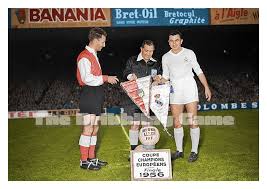
When Olympique de Marseille defeated AC Milan in 1993 – regardless of how tainted that victory may, or may not, have been – it ended decades of enforced patience for French football. It had taken almost 40 years for a French club to win the European Cup. Had fortunes taken a slightly different course in 1956 however, the history of European football’s premier club competition could have been so very different. Instead of Los Blancos of Real Madrid becoming the dominant force of continental football, their place in history may well have been taken by Les Rouge et Blanc of Stade de Reims. A club finishing in a mid-table position in Ligue 1 at the end of the 2018-19 season, newly returned to the top tier of French domestic football after a period of relative inconsequence, drifting around the lower leagues, could have been the swaggering aristocrats of the nascent European competition, rather than one of the sans-culottes lamenting over what might have been. Continue reading →
‘When the gods wish to punish us, they answer our prayers’ – Lionel Messi’s international debut.

Considered by many pundits not only to be the best player in the world, Lionel Messi is also widely touted as the greatest of all time, but as success seems to follow success in an unending flow of glory and acclaim, it’s worth remembering that things weren’t always like that. In fact, as an 18-year-old Messi entered the international playing arena for La Albiceleste on 17 August 2005, the game would be far from the triumph every young footballer dreamt of and prayed for, when pulling on the shirt of his country for the first time. In fact, it would be difficult to suggest how the fates could have conspired to be any more perverse. Continue reading →
Nummer Veertien! – The legend and legacy of Johann Cruyff at Ajax

After suffering an early season groin injury, Johann Cruyff returned to first-team action with Ajax in an Eredivisie against PSV Eindhoven on 30 October 1970. In the 23-year-old’s absence his regular number nine shirt had gone to Gerrie Mühren. Legend has it that, on his return to the team, the shirt was offered to Cruyff. He declined however, passing it to Mühren. Cruyff then reached for the next shirt in the pile. He picked up number 14. Continue reading →
The golden years of Sampdoria – Calcio’s ‘Hipster’ club.

On 6 September 1992, Channel Four launched its ‘Football Italia’ series relaying live Serie A games to a UK audience broadly unaware of the delights of the domestic Italian game. Experience of Italian football had been largely limited to teams competing against British clubs in European competition, but from that date, the gates to a broader appreciation of Calcio were thrown open. Any thoughts that viewers may have had that the experiment would wilt as defensively dominated football would be a turn-off were dispelled by the opening game as Sampdoria and Lazio featured in a hugely entertaining 3-3 draw.
Whoever chose that particular match-up to introduce Serie A to a potentially sceptical public had selected wisely. Lazio had just secured the services of Paul Gascoigne, although injury prevented him taking part in this game and ‘Samp’, as they were widely known, were one of the top clubs in the country. In fact, the previous season market the zenith of their powers and the end of a glorious four-year period for the Genoese club who had risen to prominence with a roster of legendary players, a coach who delivered outstanding performances from his players, and a shirt that became the byword for football hipster wear at the time. Continue reading →
“You don’t want to walk in another man’s footsteps, you want to create your own.” Henrik Larsson – Celtic legend.

In July 1977, the then Celtic manager, Wim Jansen pounced when Feyenoord fell into a contract dispute with their star striker. In four years with the Rotterdam-based club, he had notched 26 league goals in 101 games, but a move now seemed inevitable. Jansen convinced his board to part with £650,000 to complete the transfer, and the Hoops welcomed Henrik Larsson to Glasgow. The rest, as they say, is history. Continue reading →
The little big man and the big little man – Preben Elkjær and Michael Laudrup.

The ‘big man, little man’ combination is a common thread among successful striking partnerships. There’s the ‘big man,’ full of muscular hustle and bustle, aggression and a determination to dominate defenders. Then there’s the ‘little man’. He’s the smooth as silk, extravagantly skilled and elegant technician, whose ability bewitches opponents and fans alike. It’s a fairly apt description of Preben Elkjær and Michael Laudrup, Denmark’s iconic striking partnership of the mid to late 1980s when Danish Dynamite exploded into international football. Like so much about the pairing though, there’s even an iconoclastic element to the ‘big man, little man’ description. In this case, Elkjær, the ‘big man’ stood at 5’ 11”, whilst his ‘little man’ partner was 6’ 1” tall, although he hardly ever headed the ball. It’s not the only non-traditional aspect of a partnership that had so many contrasts – both on and off the field – but, particularly in the World Cup of 1986, for a brief time, took on the mantle as the most dynamic pair of strikers in world football. Continue reading →
‘Dolly & Daisy’ the rocks of Ferguson’s early Manchester United team.

If the sobriquet of ‘Dolly and Daisy’ sounds like a double act from an Old Time Musical Hall playbill, you’ll probably be surprised to learn that, thanks to their manager, it was in fact the nom de guerre of the most successful central defensive pairings of the early Premier League years. Steve Bruce and Gary Pallister were the pair in question, and they would write their names large into the history of the most successful football club of the time. It would be difficult to overestimate the importance that the pairing had on the development of Manchester United’s domestic dominance, when Sir Alex Ferguson built his dynasty of success. Suffice to say however, that the unassuming pair at the heart of the Old Trafford backline was the rock upon which the Scot relied over a seven-year partnership jammed full with trophies. Continue reading →
“The secret to happiness is freedom… And the secret to freedom is courage.” (Thucydides) – The philosophy of the Libero.
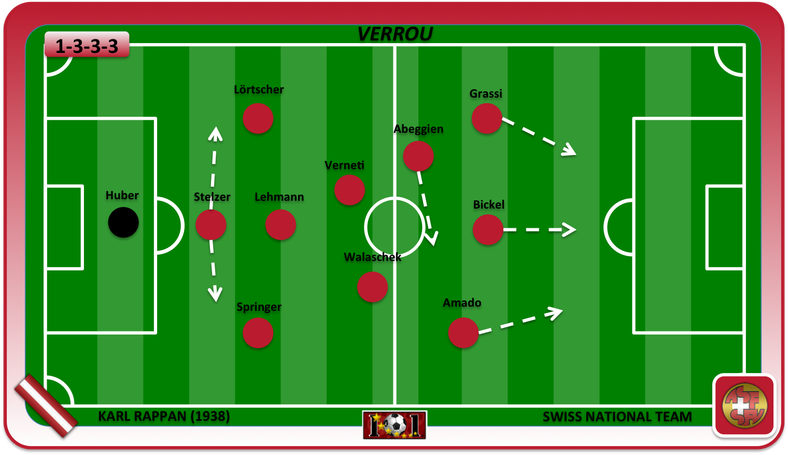
Ever since the early days of the game, wherever people have kicked a ball around, someone would come up with an idea that would help their team, their players, to be more successful and to be better achieve their aims; in short to win more often by making the most of the assets at their disposal. These sorts of ideas weren’t tactics; they surpass that. They provide the framework, the structure that tactics are hanged upon. They are ways of playing – much as there are ways of living – a set of ideas and principles that guide in decision making, a light that illuminates the path. Continue reading →
 Gary Thacker