Cruyff in Oranje.

It’s often argued that for any footballer to be worthy of inclusion in the pantheon of the very greatest players of all time, as well as having success with their various clubs, they must also have excelled on the international stage, having accumulated appearances galore and delivered at the game’s most prestigious competitions. For example, Pelé made 92 appearances for the Seleção Canarinho, and played in four World Cups, winning three of them. Diego Maradona made one international appearance less than the legendary Brazilian star and also appeared in four World Cups, although only winning once, when he lifted the trophy as captain of La Albiceleste in 1986 after a dazzling individual performance. Franz Beckenbauer broke a century of appearances for the Die Mannschaft. He retired after playing 102 games for the national team. He only played in three World Cups, winning the tournament on home territory in 1974, but had also added a European Championship winner’s medal to his haul of honours, two years earlier.
With such standards to be measured against, the question arises as to how a player who appeared less than 50 times for his country – ranking at number 56 in the list of players with most appearances – played in just a single World Cup and the same number of European Championships, and never landed a single honour on the international stage, can be justifiably counted alongside the likes of Pele, Maradona and Beckenbauer as one of the true all-time greats of the game. The answer to that query is that the player in question is Hendrik Johannes Cruyff, more usually known as Johan Cruyff.
Whilst no one would contend that any of Pelé, Maradona or Beckenbauer were anything but generational talents, they each had the benefit of joining a team that had an established pedigree on the international stage. A teenage Pelé broke into the 1958 World Cup squad and, although Brazil were yet to win the trophy, runners-up in 1950 and a quarter-final appearance before losing out to the magnificent Hungarian team in 1954 illustrates that they were already among the top ranked teams in the world before he burst onto the scene. Further, after being injured in a group game in 1962, the Seleção went on to capture the trophy without him and have been crowned world champions twice more since he retired. Argentina won the World Cup without Maradona in 1978, and the Germans had won it once before Beckenbauer arrived in the team, and twice more after he had retired.
Such a pedigree of success was absent from the Dutch national team when Cruyff stepped onto the international stage on 7 September 1966. The Oranje had played in both 1934 and 1938 World Cups but had failed to win a single game, let alone progress in the tournaments. By the time they eventually made a return into football’s four-yearly jamboree in 1974, having been absent for 38 years, as David Winner states in Brilliant Orange, they had a World Cup record akin to that of Luxembourg. They had also failed to qualify for any European Champions up to that date.
In that game September 1966 game, another doomed qualifier for the 1968 European Championships, Cruyff’s debut for the Oranje was made alongside just two other players who would see action in the World Cup some eight years later. Ajax team-mate Piet Keizer appeared in just one game across the tournament, the goalless group game against Sweden, and Feyenoord skipper Rinus Israël who made a few appearances from the bench. Cruyff was hardly joining an established group of top players with a celebrated international pedigree. Yet, by the time he played his final game in Orange eight years later, the Dutch team had not only played in a World Cup Final and a European Champions and were on their way to a second successive World Cup Final, but had also been established as one of the greatest and most innovative international teams of all time. Equally, after his retirement from international football in October 1978, the Oranje would not attend a World Cup Finals for another dozen years. Typically, seven minutes after half-time in that debut against Hungary at Rotterdam’s Stadion de Kuip, he scored to put the Dutch two goals clear. Equally typically for the Oranje of the time however, two late goals from the visitors denied him a debut win.
The team was then managed by the German coach Georg Keßler who, surprisingly after the debut goal decided to drop the teenage Cruyff for the next game, a 2-1 defeat in a Friendly away to Austria. He was back however for the Friendly against Czechoslovakia in November of the same year. But, on 76 minutes, Cruyff became the first ever Dutchman to be sent off while playing for the Oranje. It led to a ban from the KNVB, which angered the already frustrated Cruyff. It wouldn’t be last time that he and the Dutch footballing authorities would cross swords. A goal on his debut and then a sending off in his second game, the scene was set for an international career that would be anything but mundane and ordinary – very much the reverse. Cruyff may not have been the only influence in such a dramatic rise in the fortunes of the Oranje but, in a 42-game career full of brilliance, bravado and bloody-mindedness in pretty much equal measure, as Brian Clough might have phrased it, he was in the top one.
Two years earlier, Cruyff had made his Ajax debut under Vic Buckingham with the English coach offering perhaps the greatest understatement of all time when he described the 17-year-old as ‘a useful kid’. It was under Rinus Michels however, who replaced Buckingham in 1965 that Cruyff’s football blossomed, with the new man at the helm quickly recognising the unique talent the club had and guiding him towards the full flowering of his abilities, before moving to Barcelona. Much as Cruyff’s influence grew with the Amsterdam club, as the years moved on and his insatiably demanding ability developed, the same would be the case with the Oranje, until the stage when he was widely considered to be a personality too large to be contained in a team environment.
The qualification campaign for the 1968 European Championships fell away, as so many others had done in the past and, when a 1-1 home draw against Bulgaria on 27 October 1969 with Cruyff absent once more, brought an end of Dutch hopes of a trip to Mexico the following year and World Cup qualification hopes were dashed once more, and Keßler’s time was all but done. The new man in charge was František Fadrhonc.
After a period of absence from the colours, the Czech-born coach selected Cruyff for a Friendly against Romania on 2 December 1970, and was rewarded with a brace from the returnee who was determined to state his case. Dutch hopes of qualifying for the 1972 European Championships were already in the Intensive Care Ward after a home draw to Yugoslavia and a defeat away to East Germany. In the next qualifier though, Cruyff bagged another brace in the six-goal romp against Luxembourg, before missing out again as qualification aspirations were all but extinguished by a defeat in Split’s Stadion pod Marjanom, when the absolute minimum of a draw was required to keep the faint hopes flickering. At the end of the group, the Dutch finished two points behind Yugoslavia, but the KNVB decided to keep faith with Fadrhonc for the campaign to reach the 1974 World Cup in neighbouring West Germany.
With Ajax now double European Cup winners and Cruyff the undisputed leader of the team and high priest of totaalvoetbal, he had also assumed the role of leading light in the national team. The qualifying programme began in May, and a 0-5 romp away to Greece, with another brace from Cruyff, set hopes rising, followed by success in a couple of Friendlies, a 3-0 win over Peru and 1-2 victory in Czechoslovakia with Cruyff opening the scoring. The qualifying group always looked likely to be a battle against Belgium for the sole qualifying spot, with the other members, Norway and Iceland, as the makeweights – and that’s how it turned out. When the two teams faced each other on 18 November 1973, they had each garnered maximum points against the group’s lesser lights, with a goalless draw in Belgium failing to offer either side much advantage. Belgium had scored 12 times without conceding, but the Dutch had doubled that figure and allowed their opponents as measly two strikes. It meant a draw was all that the Dutch needed to qualify for their first World cup in 36 years and, despite a massively controversial offside decision that ruled out a last-minute Belgian goal, they got that draw and headed across the border to West Germany.
With qualification sewn up, largely on the back of talismanic performances and seven goals across the six fixtures from Cruyff, the Ajax player was now the lead character and, accepted to be so by the KNVB who were allegedly acting under the player’s powerful influence when Fadrhonc was dismissed, despite being the first Oranje coach to get his team into the finals of a major tournament since the second World War. Cruyff’s old mentor Michels was temporarily seconded from Barcelona to take over. Before the tournament started however there were plenty more of Cruyff’s demands to be met.
Jan van Beveren had been the established first choice goalkeeper until a late season injury saw him miss the tail-end of the qualifiers with Piet Schrijvers stepping into his place. Van Beveren was one of Europe’s top stoppers and, when he regained fitness ahead of the tournament, a return to the national team looked inevitable, before a dispute with Michels saw him left out. Schrijvers looked to be the man to benefit but, reports suggest that with Cruyff pleading his case as supposed being more suitable to the creed of totaalvoetbal, Jan Jongbloed was the surprise selection between the sticks when the World Cup started. The 33-yearold FC Amsterdam goalkeeper had a mere five minutes of international experience behind him, as a late substitute a dozen yeas previously – and he had conceded in that briefest of spells. Nevertheless, with Cruyff as the driving force, the day was won and, in fairness the veteran did little to let anyone down, only conceding a single goal, and that a late own goal by Krol against Bulgaria with the game already won, before the Final when his limitations may well have been exposed.
Cruyff was also the main player in conflicts between the squad and KNVB over bonus payments and the decision to play in shirts provided by Adidas, carrying their famous three-stripe branding in black lines on the sleeves of the orange shirts. Cruyff was sponsored by Adidas’s arch-rivals Puma and refused to wear the design that had been agreed in contract by the KNVB. At first they stood firm and said the choice was theirs not the players. Cruyff countered by conceding that point but countered by asserting that the value was added by his head poking through the top of the shirt. Eventually peace was declared with a special two-striped version being provided for Cruyff. If there was any doubt who wax the first among what was surely a group of unequals, the squad numbering for the tournament told a telling tale. Numbers were allocated to the players on an alphabetical basis. The one exception being Cruyff, who was allowed to keep his number 14. For many of observers, so much of this may have looked like pandering to an inflated ego, and perhaps it was, but Cruyff’s performance in Germany justified all of that.
In the opening game against Uruguay, he pulled the strings of the Dutch attack with Johnny Rep scoring both goals that set the Oranje on their way. Four days later, the only stutter in the Dutch march towards the Final occurred when a determined, and well drilled, Sweden held them to a goalless draw. It was in this game however that Cruyff revealed the move that would carry his name for evermore. Cruyff had been drifting to the left flank of the Dutch attack on numerous occasions, allowing Rep to drift inside and seeking to unbalance the Sweden defence. When Rep played yet another wide ball to him midway through the first period, unbalanced was hardly a sufficient description for what was about to happen. Full-back Jan Olsson dutifully closed on Cruyff and, as he shaped to play the ball across field, the defender jabbed out a leg to intercept a pass that never came. Instead, Cruyff hooked the ball back between his own legs and scampered clear with Olsson looking as dumbfounded as a dupe in a conjurer’s trick. So far had he been sent the wrong way that he not only needed a ticket to get back into the stadium, he needed to hail a taxi to get back there first.
If the Sweden game had been grace, but not glory, that lack was remedied in the next game against with a comfortable 4-1 win over Bulgaria, that sent the Dutch into the second phase. The first game paired the Dutch with Argentina, and Cruyff scored twice in a 4-0 demolition of the South Americans that could been seven or eight goals had they been minded to press for them. His first goal was a mesmerising combination of athletic genius and balletic poise as he plucked a Van Hanegem pass from the air, danced around the goalkeeper and rolled the ball home. It was probably the most entrancing moment of the whole joyous Cruyff stellar performance in Germany.
A 2-0 win then eased the Dutch past East Germany and into a confrontation with Brazil Four years previously, the Seleção had produced magic of their own in winning the 1970 World Cup. This team carried the same name, but hardly the same ethics. In Germany they largely abandoned flair and style, deploying muscle and physicality rather than the grace of O Jogo Bonito. Beauty overcame the beast eventually though, and Cruyff’s goal that sealed the win on 65 minutes must surely have given him as much pleasure as any scored wearing his country’s orange shirt, albeit they wore white in that game.
And so, to the final. A game where Cruyff would be the leader of an orchestra that played sublime music, compelling the German to dance to their hypnotic tune. And yet, despite being a team of supreme talents, they lost their way and saw an early lead disappear. If anything summed up Dutch football with Cruyff, that was it. They entertained, entranced and enthused all lovers of the game, but their wings of wax melted as they flew too close to the sun. West Germany won the trophy, but Cruyff’s Oranje won the hearts of all football fans.
Michels left after the World Cup, to be replaced by the little known, and even less regarded coach George Knobel. It seemed a strange appointment to go from master coach to someone who had led MVV Maastrict, a md-table team, before taking over Ștefan Kovács’s all-conquering Ajax team. His tenure in Amsterdam would last just one season before being shown the door. It was a strange appointment and if anything, only increased the influence of Cruyff in the national team. Knobel was left as a hostage of fortune with the skills of Cruyff delivering success on the field, leaving the coach compelled to indulge his whims and wishes, or risk losing the team’s greatest asset.
The issue was perhaps best illustrated ahead of a European Championship qualifying game against Poland. By this time, Neeskens had joined Cruyff in Barcelona and the pair were granted dispensation to arrive late at training sessions due to the extra travel involved. The inch offered quickly got stretched to a mile though and, on one infamous occasion Cruyff arrived late after reportedly taking his wife shoe-shopping in Milan. As he and Neeskens arrived late for training ahead of the vital qualifier against the Poles, either Van Beveren or Willy van der Kuijlen, various accounts differ, was heard to remark “Here come the Kings of Spain.” Van Beveren and Van der Kuijlen were both PSV Eidhoven players and the number of PSV players in the squad and grown with the club’s success in the domestic game. That would do little to save them though. Whether Cruyff actually heard the remark, or it was related to him later is unclear. The upshot was however that he announced that Knobel had a choice. Either Van Beveren and Van der Kuijlen went, or he did. Unsurprisingly, Knobel bent the knee and the pair left the training camp. Other members of the PSV contingent, were initially prepared to walk out as well, but Van Beveren talked them out of it. Van der Kuijlen would later return to the fold, but the goalkeeper’s exile was much longer. Cruyff turned in a virtuoso performance. The Dutch won 3-0 and headed towards qualification. Would they have done so had Knobel backed Van Beveren and Willy van der Kuijlen and let Cruyff walk away instead? It’s one to ponder.
Sadly, the Oranje’s first venture into the truncated European Championship Finals was brief. Knobel was running out of time and respect within the squad. A row with Van Hanegem saw the Feyenoord player dropped to the bench and an ongoing dispute with the KNVB meant the semi-final against Czechoslovakia would be his last game. Cruyff was carrying an injury into the tournament and, on a wet and windy night, the Dutch lost both Neeskens and Van Hanegem to red cards and were eliminated in a sad and dispiriting performance. They went into the tournament as favourites, but such adulation ill fits with the Oranje and seldom heralds success.
There was little time for lament however. Knobel was shuffled away and the KNVB appointed Jan Zwartkruis in his place with qualifying for the 1978 World Cup under way in September. Placed in a group with Belgium, Northern Ireland and Iceland, the Dutch eased to qualification winning five of their six fixtures and drawing the other. At such times however, there is always room for unrest in the Dutch camp. Recognising the quality of Van Beveren, the new coach sought to reincorporate the goalkeeper into the squad with a sleight of hand, selecting him in the squad but not playing him in the hope that a renewed familiarity may encourage a reconciliation with Cruyff. It wasn’t to be. Frustrated by not being selected to play, Van Beveren eventually gave up the unequal struggle and officially retired from international football. He had made a scandalously low 32 appearances for the Oranje. Had merit been the sole criterion for selection, that number would surely have been doubled. Van Beveren missed out on the 1978 World Cup as, ironically, would Cruyff.
On 26 October, Cruyff featured in the 1-0 win over Belgium that completed the Oanje’s qualification programme. Few knew it at the time, but it would be his final game for the national team. Six weeks earlier, Cruyff had been sitting at home in Barcelona watching television when, what appeared to be a courier, appeared at his door. In reality, the identity of the visitor was somewhat different. Cruyff and his family had been targeted by a criminal gang seeking to kidnap Barcelona and the Netherlands star player. Fortunately, after Cruyff and his wife had been tied up, she managed to escape and raise the alarm. The culprits fled and the danger had passed. The trauma however would last much longer.
Leaving his family and travel to South America was too much a burden for Cruyff and he announced his retirement from international football. There were a number of campaigns seeking to persuade him to relent. Without revealing the true cause for his decision – he was advised by the Spanish police to keep silent about the whole affair, in case it encouraged others to repeat the attack – he was adamant. The international career of Johan Cruyff was over.
If one were to seeking to illustrate the influence of Cruyff on the national team, its fortunes before his arrival, the dramatic rise during his time in Oranje, and the decline afterwards, is evidence aplenty. Thirty-eight years absence from the World Cup were broken with two successive qualifications across a four-year spell, both of which were driven by the talismanic number 14. After 1978, the wait would stretch until 1990 before they returned. Pelé, Maradona, Beckenbauer won far more honours than Cruyff did during their international careers. Given that he won none, that would hardly be difficult. What none of that trio could say however is that arrived at a time when their teams were considered akin to the status of Luxembourg in international football terms and transformed them into, if not the best, then one of the international teams of all-time and surely the greatest never to have won a World Cup. How did that happen? It was because one of the greatest players, one with an insatiable desire to succeed and a self-belief that he could make it happen, first pulled on the Netherlands national shirt. For all of the arguments, disputes and dissent, it was a time of unheralded success. It was a time of magic. It was Cruyff in Oranje.
(This article was originally produced for the ‘Cruyff’ magazine from These Football Times).
Rob Rensenbrink – Anderlecht’s ‘Snakeman’.

Pieter Robert Rensenbrink, forever known as Robbie Rensenbrink was born in Amsterdam in July 1947. Unlike many of the stars of the great Oranje teams of the 1970s born in the Dutch capital around that time however, he slipped through the Ajax recruiting net and began his career at another Amsterdam club, the then amateur set up at DWS. Despite outstanding success as his career developed after moving on from DWS, he would never return to play club football in his native country. If his international fame was garnered in an oranje shirt, the colour of his club success would be purple.
Although hardly the powerhouse that Ajax came to be, DWS were a more than decent club and had been Eredivisie champions in the 1963-64 season, finishing second and then fourth in the following terms. A teenage Rensenbrink joined in 1965 but, by that time, the club was in a steady decline and would hardly entertain aspirations of the title again. The club was a useful launch pad club for Rensenbrink, but hardly one that could contain the burgeoning talent of the forward. In his final season with the club, he netted 15 league goals in 34 games for a club destined to finish in mid-table. It was no mean feat. In 1969, a move across the border to Belgium and initially Club Brugge would see his abilities given full range.
It should perhaps be considered less of a surprise that a left-sided player chose such a left-field move, when the conventional wisdom dictated that the inevitable move from DWS would be to either Ajax or Feyenoord – who were about to launch into a period of continental domination. Even deciding on a move to the Belgian league that, in the Netherlands at least, was considered as being inferior to the Eredivisie was strange enough, but choosing Cub Brugge , who hadn’t won a league title for almost half-a-century only added to the mystery. Rensenbrink was however, apparently sold on the club’s ambition, headed at the time by another Dutchman, Frans de Munck. For both club and player, the move would deliver success, albeit only briefly.
In his first season, Club Brugge finished second to Standard Liège, trailing the champions by a single point, and took a European spot after winning the Belgian Cup, trouncing Daring Club de Bruxelles 6-1 in the final. Success against Kickers Offenbach and FC Zürich took Club Brugge to the last eight of the Cup Winners Cup, where they fell to Chelsea, the eventual tournament winners. Back in domestic matters, another second place rubber-stamped the club’s progress and the gap to Standard Liège was now down to a single point, but it would be Rensenbrink’s last term in Bruges. The forward had averaged a goal every other game for the club and had become hot property.
By the end of the 1970-71 season, whilst Rensenbrink had been in Belgium, Dutch club football had ascended the heights of continental competition with first Feyenoord, and then Ajax lifting the European Cup. The latter would remain top of the European tree for three successive terms. It looked like time for Rensenbrink to end his Belgian sabbatical and return to the Netherlands, choosing between Amsterdam and Rotterdam, with a mix of the continent’s other major clubs also showing interest.
Rensenbrink however felt at home in Belgium and, instead, elected to move across the country to join Anderlecht. Across the following nine years, with Rensenbrink’s play driving them forwards, Anderlecht would collect a trove of domestic silverware, including two Belgian league titles, four Belgian Cups, and a brace of League Cups. In Europe, they would win the Cup Winners Cup in 1975-76, with Rensenbrink scoring twice in the final against West Ham United, and be losing finalists following year, before again lifting the trophy in 1977-78 defeating Austria Wien in the final with another brace from Rensenbrink in a 4-0 romp.
As well as netting his fair share of goals, Rensenbrink was also the consummate team player and formed an effective forward line with Belgium internationals Ludo Coeck, the legendary Paul van Himst and Hungary’s Attila Ladynski. The success was almost instantaneous with goals flowing. Rensenbrink’s first league season with the club brought 16 goals and the league championship returned to the Parc Astrid. Those goals proved to be all important as the title was determined on goal difference. Both Anderlecht and Rensenbrink’s former employers, Club Brugge finished the season on 45 points. Brugge’s defensive record was slightly the better, conceding 19 goals to Anderlecht’s 22, but the goals scored column comfortably eliminated that deficit, Rensenbrink’s haul significantly contributing to the club’s total of 67 strikes, ten clear of Club Brugge’s.
The club’s manager at the time was the German, Georg Keßler who, as coach of the Netherlands, had given Rensenbrink his first cap for the Oranje back in May 1968. It would be the overture to a glittering international career that saw Rensenbrink reach successive world Cup Finals in 1974 and 1978 and, in the latter, come within millimetres of delivering football’s Holy Grail to the Nethgerlands. Across the following years at Anderlecht, Rensenbrink would play under three more managers – Belgians Urbain Braems and Raymond Goethals plus, briefly, Dutchman Hans Croon. Each would enjoy success there, and each would have much to thank for the skills and contribution of Robbie Rensenbrink.
It wasn’t merely the Dutchman’s goals that made such a difference to the club’s fortunes however. Now comfortably into his twenties, his style had been established and his skills well-honed. Left-footed, he could both conjure a pass or deliver a powerful shot with minimum of apparent effort, often suggesting to some that his work-rate was sometimes below par when, in fact, it was merely another deceptive quality. His lythe running style was both distinctive and often beguiling to opposing defenders, who were often either deceived by his dribbling skills or the coruscating bursts of speed that left opponents trailing in his wake. These abilities conspired to earn him the nickname that would both stay with him throughout his career, and come to almost define an uncanny knack to wriggle out of seemingly impossible situations. Het Slangenmens (The Snakeman) would coolly slither free and deliver a devastating killer bite with either an assist or goal.
Despite repeating his first season goal tally of 16, the 1972-73 season term saw Anderlecht slip from their top position to a lowly sixth place, as Club Brugge gained a measure of revenge, for their near miss the previous term, lifting the title. The following three seasons though would see Rensenbrink soar, scoring 20, 19 and then 23 in domestic competition, and adding valuable strikes in Europe as well. In 1973-74, with their Dutch star forward netting those 20 goals, Anderlecht regained the title under Urbain Braems, scoring a mightily impressive 72 goals across the 30-game league programme. They also added a Belgian League Cup triumph to underscore their status and Belgium’s top club. The following term, with Braems still at the helm despite losing the title to surprise champions R.W.D. Molenbeek as the league was restructured to accommodate 20, rather than the previous 16, clubs some compensation was garnered by defeating Royal Antwerp to again win the Belgian Cup.
By this stage, Rensenbrink had been joined at the club by Arie Haan. The pair had played together in the 1974 World Cup Final, and would do so again in 1978. As the great Ajax team was disintegrating after Ștefan Kovács left to take charge of the France national team, many of their stars were drifting away, and Haan had decided to join Rensenbrink in Brussels. He would add another dimension to the club, delivering even more success – as would the arrival of another Dutchman – when Hans Croon took charge for a single season, succeeding Braems. It was a time that could have also seen Rensenbrink leave Brussels.
During the 1974 World Cup Finals in Germany, Johan Neeskens had agreed a deal to join Barcelona, and reunite with Cruyff and Rinus Michels in Catalunya. Ajax decided that the man they wanted to replace Neeskens was Rensenbrink. With the money received from Barcelona, they considered themselves to have a strong bargaining hand. Anderlecht, however, declined the cash offered, and suggested to the Amsterdam club that the only deal they’d consider was if Johnny Rep was involved as part of the fee for Rensenbrink. Ajax decided against pursuing the transfer on such terms and Rensenbrink stayed in Brussels. The success enjoyed by the club over the next few seasons suggested that the Belgian club had been wise to hold onto their star player.
The domestic cup success had granted Anderlecht another entry into the Cup Winners Cup competition and, this time, they would take full advantage, with Rensenbrink being a key element in the success, scoring eight goals in the nine tournament games. A first round tie against Rapid București threatened an early exit after a 1-0 defeat in Romania. Back in Brussels though, inevitably, it was Rensenbrink scoring the winning goal, netting a penalty five minutes into the second period after Gilbert van Binst had levelled the aggregate scores. A comfortable 3-0 home leg win over FK Borac Banja Luka in the next round saw Rensenbrink open and close the scoring, with a goal from Ludo Coeck sandwiched in between. It rendered the second leg almost meaningless and a 1-0 defeat for Anderlecht was only of interest to statisticians.
In the last eight, Anderlecht were paired with Wrexham for, what looked on paper at least, a fairly comfortable passage into the last four. As things turned out though, the encounter was anything but comfortable. After the first leg in Brussels, Anderlecht only held a slim single goal lead, thanks to another strike by Van Binst. The visit to north Wales would be a test, especially as, going into the game, Anderlecht had gone four successive away games without a goal. The game was tight and, after a goalless first period with the welsh team holding their own, the second half would bring goals. On the hour mark, Stuart Lee squared the aggregate scores and the momentum now clearly lay with the Welsh club, as they pressed for the decisive strike. Anderlecht rallied however and with 15 minutes to play there had been no further score. At such times, teams look to their star players to step up, and Rensenbrink delivered, netting a killer ‘away goal’. Anderlecht were in the last four.
The semi-final pitted them against East German club Sachsenring Zwickau. Ties one step away from a major European final can often be close affairs, but this wasn’t one of them. A brace by Van der Elst and, somewhat inevitably, a goal by Rensenbrink gave Anderlecht a 0-3 away win and the opportunity to coast to the final in the return in Brussels. Another goal each for Rensenbrink and Van der Elst eased the club over the line and into a final where they would face West Ham United also in Brussels at the Heysel Stadium.
Once more it was the twin threats of Van der Elst and Rensenbrink that carried the day. After Pat Holland had put the Hammers ahead, both Anderlecht players scored to turn the game around. Keith Robson squared things up with 20 minutes to play, but both Van der Elst and Rensenbrink added further goals to deliver the Belgian club’s first European trophy. Rensenbrink netted from the penalty spot, and with time slipping away, it was the Dutchman, delivering a Man of the Match performance, who set up the clinching goal for Van der Elst. Rensenbrink’s eight goals in just nine games had powered Anderlecht to triumph. Just over a month later, the club returned to the Heysel and defeated Lierse SK 4-0 to retain the Belgian Cup, with Rensenbrink scoring once more.
Despite the success he enjoyed in Brussels, Croon left Anderlecht at the end of the season, returning to his native Netherlands and taking over NEC. The vacant manager’s chair was filled by the legendary figure of Raymond Goethals, who continued the trend of success, with Rensenbrink rapidly becoming the club’s talismanic striker. The following season, despite a strong attempt to retain their European title, Anderlecht fell at the last hurdle, losing to Hamburger SV in the final. Rensenbrink’s still notched seven goals in his nine games in the tournament, but further continental success would have to wait. There was also frustration in the club’s league campaign, as Anderlecht finished as runners-up to Club Brugge.
The club was going through a period of change at the time, as Goethals adjusted the squad to his liking, and they were again frustrated in the league, once again losing out to Rensenbrink’s former employers, Club Brugge; this time by a single point. Whatever changed around him though, Robbie Rensenbrink remained as a constant and, in the 1977-78 season, the club prospered anew, winning their second Cup Winners Cup trophy in three years. As in the final to years earlier, Rensenbrink was vital to the club’s success. In total, he scored five goals in the Anderlecht’s run to triumph, with two of those saved for the final, and the crushing 4-0 defeat of Austria Wien.
Although, it’s tempting to reduce Rensenbrink’s contribution to Anderlecht’s success in reaching three successive Cup Winners Cup Finals merely to the goals he scored, that would be to deny the consistently unassuming nature of his commitment to the team’s success, and the fruitful partnerships he formed with other players, particularly of late with Van der Elst. The Dutchman’s name however, is forever written into the annals of the tournament as its record goalscorer. His 25 strikes in 36 games surpassed that of Gerd Müller and Gianluca Vialli and, as the Cup Winners Cup is now assigned to the annals of history, it’s a record that will stand for all time.
The following season, Anderlecht finished as runners-up in the Belgian league once more, this time losing out to Beveren. It would be the first season Rensenbrink had played in the Belgian capital without winning either a domestic or continental trophy. It also saw his lowest scoring return since joining the club, recording just a dozen goals in 31 league outings. It seemed that the conclusion of his time in Brussels was approaching. The end was confirmed at the end of the 1979-80 season. Now 33 years old and having scored just three goals, with Anderlecht finishing in a lowly fifth position in the league, changes were afoot.
Goethals left, and was replaced by Yugoslav manager Tomislav Ivić. In his first erm with the club, he would deliver Anderlecht their first league title since 1974, but Rensenbrink wouldn’t be part of the celebrating players. In the summer of 1980, he moved to the USA, following on the footsteps of Cruyff, Neeskens and a few other former Oranje team-mates, joining the Portland Timbers. It would be a brief tenure in the Oregon city though. In 1981, the ambitious second tier French club Toulouse persuaded Rensenbrink to return to Europe and assist in the club’s renaissance. Again, it was a short stay, but the move did have the happy ending of Rensenbrink’s 12 game stint with the club delivering promotion, before he decided on retirement. The stature of his career in both domestic football with Anderlecht and on the international stage with the Netherlands was assured, but could so easily have been massively enhanced.
Less than a month after defeating Austria Wien in the 1977-78 Cup Winners Cup Final, Rensenbrink would be in Argentina with the Oranje in pursuit of the Dutch World Cup dream. He would score four times in the initial group stage, and once more in the second group that delivered the Netherlands to their second successive World Cup Final. After Dirk Nanniga had equalised Mario Kempes’ opening goal for the hosts, with the last seconds of the game draining away, a long free-kick from Krol found Rensenbrink closing in from the left flank to collect the ball with just goalkeeper Ubaldo Fillol to beat, but at an acute angle. Prodding the ball past the beaten goalkeeper, the world held its breath as the ball bounced towards the unguarded net. Robbie Rensenbrink was about to become immortalised in the annals of Dutch football, and etched into the records of the world’s greatest football tournament. Streets in his native Amsterdam would be named after him, children born at that time would bear his name and his fame would surely eclipse even that of Johan Cruyff. A second or so later though, the ball seemed to drift off course. It struck the post and was hacked clear. Those street names remained the same, young boys were named Johan, and Cruyff was still the Dutch icon; Robbie Rensenbrink merely a member of the supporting cast.
Perhaps that was true for the Oranje, but for the purple shirts of Anderlecht, the respect and appreciation ran so much deeper. More than 200 goals in his term with the club speaks loudly enough, but coupled with the fact that Anderlecht not only achieved their first European triumph, but reached three consecutive Cup Winners Cup Finals, while he was wearing the purple shirt, only adds to the lustre of his reputation. In 2008, Robbie Rensenbrink was voted Anderlecht’s greatest ever foreign player. It was a well-deserved accolade, and one that reflects the legendary regard for a player who turned down opportunities to star in his own country to become a hero in purple.
(This article was originally produced for These Football Times’ “Anderlecht! magazine).
Bergkamp – Arsenal’s Dutch Master
There’s a statue prominently positioned outside of the Emirates Stadium. It’s a tribute to a player who, not only brought glory and success to the Arsenal Football Club, but was also a key element in a new era of flowing, attacking and entertaining football. Unlike so many other statues in similar situations though, it doesn’t depict a trophy being held aloft, or any kind of celebratory pose. Instead it’s the image of a footballer, stretching acrobatically to control a ball. The player depicted is Dennis Bergkamp and the pose conjures up the Dutchman’s ability to exert his control over a ball, to bring it under his spell, often in the most difficult of circumstances. As representations of footballers’ abilities go, it sums up the player’s time with Arsenal perfectly. Continue reading →
The late blossoming of Dick Nanninga – Florist and Dutch international footballer.
 As the bright Oranje flame of Dutch Totaal Voetbal burnt so brightly before consuming itself in the 1974 World Cup Final and falling to cruel defeat, back in Kerkrade, a Dutch town virtually lying up against the German border, an amateur footballer watched on television. Little did he know that, four years later, donned in the famous colours of his country, he would score the goal that gave the Netherlands renewed hope that they could lay to rest the ghost of the numbing defeat to his German neighbours. In the space of those four years, Dick Nanninga would go from a part-time footballer and full-time worker on construction sites to being the robust and muscular embodiment of an artisan iconoclast among a squad of Dutch artists, the man who gave hope of redemption to his country – and a florist. Continue reading →
The late blossoming of Dick Nanninga – Florist and Dutch international footballer.
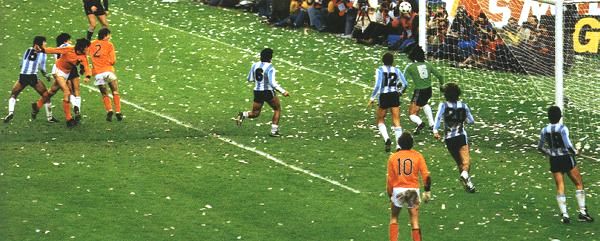
As the bright Oranje flame of Dutch Totaal Voetbal burnt so brightly before consuming itself in the 1974 World Cup Final and falling to cruel defeat, back in Kerkrade, a Dutch town virtually lying up against the German border, an amateur footballer watched on television. Little did he know that, four years later, donned in the famous colours of his country, he would score the goal that gave the Netherlands renewed hope that they could lay to rest the ghost of the numbing defeat to his German neighbours. In the space of those four years, Dick Nanninga would go from a part-time footballer and full-time worker on construction sites to being the robust and muscular embodiment of an artisan iconoclast among a squad of Dutch artists, the man who gave hope of redemption to his country – and a florist. Continue reading →
The Ill-fitting Shoe – Dennis Bergkamp at Inter.

Dennis Bergkamp became a legend playing under Arsène Wenger for Arsenal, and a statue of him outside the Emirates confirms such status had there been any doubts. Never the ravenous goal-hungry striker of Ian Wright’s ilk, instead here was a player of infinite grace; a Dutch Master who illuminated the pitch with the artistry of a painter bringing the green sward of a canvas to life with precise brushstrokes. Goals were not his prime currency, although 120 strikes in 423 games is decent fare, his foremost talent was an ability to link, to prompt and promote the strikes of others, whilst still plundering a welcome contribution of his own. Continue reading →
Ulubiony Piłkarz Polski – Grzegorz Lato and the 1974 World Cup.

Although the 1974 World Cup will be remembered for West Germany lifting the trophy that anointed them champions of the world, it also marked the explosion into international consciousness of two teams, each who may have claims to being better than the tournament’s eventual winners and, who on another day could have reasonably expected to overcome the tournament hosts. Each also had an outstanding star player who many would consider the outstanding player of the tournament.
In the final, the Germans defeated the Dutch team of Cruyff and Michaels’ totaal voetbal in a game that looked destined to go the way of The Netherlands after an early goal had put the Oranje ahead, but as they spent time admiring themselves in the mirror, they got lost in their own swagger, whilst Helmut Schön’s team equalised and then snaffled the trophy away.
The other team possessing that authentic look of potential world beaters also lost to the Germans. They succumbed in the game that took the hosts into that Munich final against the Dutch. Although the denouement of a second group stage rather than a semi-final per se, the 1-0 German victory had a similar effect. The team they had vanquished was Poland, who had amongst their number the player who would be the tournament’s top scorer, and winner of the Golden Boot. If some would consider the fame duly accorded to the cult of the Dutch entirely worthy, the success of the Poles was perhaps much less celebrated. Continue reading →
Nummer Veertien! – The legend and legacy of Johann Cruyff at Ajax

After suffering an early season groin injury, Johann Cruyff returned to first-team action with Ajax in an Eredivisie against PSV Eindhoven on 30 October 1970. In the 23-year-old’s absence his regular number nine shirt had gone to Gerrie Mühren. Legend has it that, on his return to the team, the shirt was offered to Cruyff. He declined however, passing it to Mühren. Cruyff then reached for the next shirt in the pile. He picked up number 14. Continue reading →
“The secret to happiness is freedom… And the secret to freedom is courage.” (Thucydides) – The philosophy of the Libero.
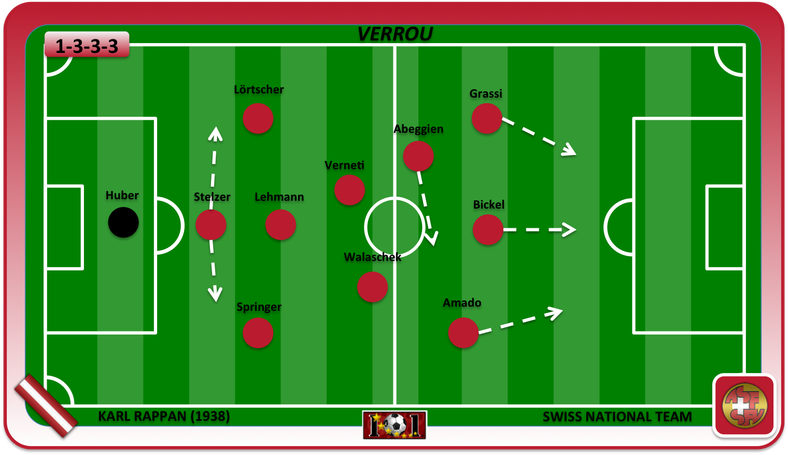
Ever since the early days of the game, wherever people have kicked a ball around, someone would come up with an idea that would help their team, their players, to be more successful and to be better achieve their aims; in short to win more often by making the most of the assets at their disposal. These sorts of ideas weren’t tactics; they surpass that. They provide the framework, the structure that tactics are hanged upon. They are ways of playing – much as there are ways of living – a set of ideas and principles that guide in decision making, a light that illuminates the path. Continue reading →
The golden memory of watching Johan Cruyff.

If you get the opportunity to see a legend in the flesh, you do it. Back in 1978, I was 21 years old, and since the early years of that decade had been an unashamed adherent to the doctrine of Dutch Totaal Voetbal. I was seduced by the poetry of the Ajax team that dominated European club football, lifting the European Cup three times in succession. The love deepened with the extravagant beauty, and ultimate fragility, of the bright flame of the Netherlands national team as they scorched the pitches of West Germany in the 1974 World Cup, before the fire became too fierce and their wings of wax melted. Football’s Prometheus. Icarus in Oranje. Continue reading →
 Gary Thacker