When the heirs of the Magnificent Magyars met the Samba Boys.
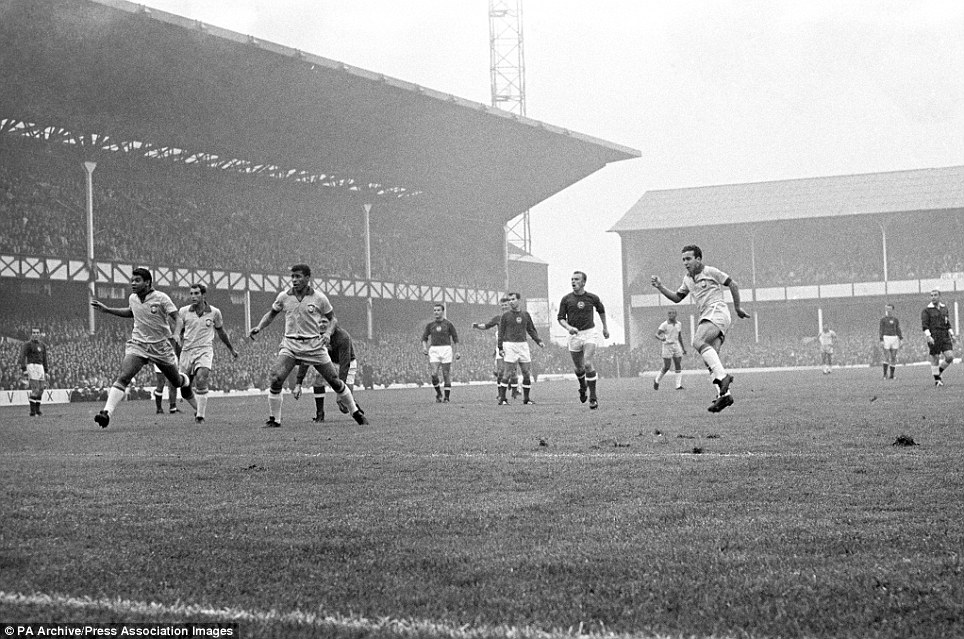
Over the years, especially since the war, international football has seen a number of teams rise to prominence, and then be swept away by the next wave. These teams haven’t necessarily won everything, scooping the board of honours over a given period. More accurately, they have been the teams that have been widely acknowledged as the game’s leaders. The players at the forefront of the game’s development, setting new paradigms and patterns that others have copied or adapted.
Some ended their time in the sun with a hatful of trophies; others entered the field and left again, empty-handed. On occasions, there’s a game when the handing-on of the torch can be identified. In the World Cup of 1974, for example, Johan Cruyff’s ‘Oranje’ destroyed a street-fighter of a Brazil team that would have embarrased Pelé and the ‘Joga Bonito’ Samba Boys of four years earlier. It was a game when the Dutch ‘Totall Voetbal’ won the day and cherished the stewardship of ‘the beautiful game’ for a few years. In other times though, the change is seamless, but no less apparent for that.
In the fifties and sixties, two magnificent teams rose above the rest to dominate football for a generation. In the early part of the fifties, it was Hungary and the Magnificent Magyar team of Puskás, Hidegkuti and the cherry-shirted magicians playing under Gusztáv Sebes. The team that went from May 1950 to February 1956, winning 43 games, drawing a mere half-dozen, and losing just one – that one game however was the World Cup Final of 1954, and it denied the Hungarians the crown that would have rubber-stamped their dominance. Continue reading →
Electric dreams and football teams – KV Mechelen and John Cordier.
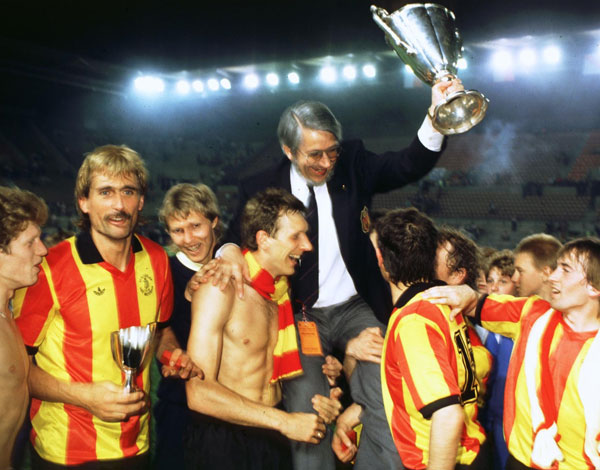
There’s an old saying that goes something along the lines of ‘the only way to make a small fortune owning a football club is to begin with a large fortune.’ A club may be pottering along, very much as it has done for most of its existence, then someone takes control and starts investing money, the club grows in inverse relationship to the amount of money that the owner has – then comes the crunch.
The owner decides he’s spent enough and divests himself of the costs. The club plummets and ends up in a far worse state than before the money came along. For some clubs, it even leads to destruction as the bright, attractive, but ultimately destructive flare of its owner’s ambition burns out, leaving behind merely ashes, memories and regrets. Stories such as this, tinged with pathos, are common across the game, and fitting right into the model is the period covering the late eighties and early nineties for Belgian club KV Mechelen and IT business magnate John Cordier. The club lived the dream – the electric dream of its owner’s ambition – and then awoke with a hangover. Continue reading →
The man who broke Brazilian hearts and the world transfer record.
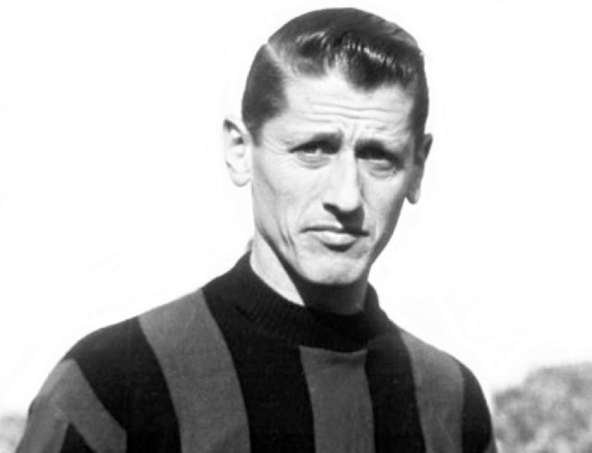
Juan Alberto Schiaffino was pretty much the embodiment of precisely what you would not expect a footballer to look like. Short and slender, with a pallor complexion, he could easily have passed for some someone in need of a good meal, rather than an outstanding athlete. Here was a player though that reached the very top of the football tree, and at the height of his powers, was deemed to be worth more money than any other player on the planet before him. Continue reading →
The warm Riazor evening when Depor tore apart the champions of Europe.

On Tuesday, 23rd March 2004, AC Milan entertained Deportivo La Coruna at the Stadio Giuseppe Meazza in that season’s Champions League competition. As well as being the reigning champions, the Rossoneri, under coach Carlo Ancelotti were many pundits’ favourites to win the title again. The outcome of this first leg match certainly did little to shake any such opinions. Continue reading →
Hotbeds of Football – Istanbul

According to the Lonely Planet website, Istanbul is the place is “where continents collide.” Given that the Bosporus that divides the city forms the border between the continents of Europe and Asia, some may see the description as somewhat less than illuminating. Delve a little deeper into the intricacies of this polyglot city though, and particularly its football culture as will be seen later, and there’s more than a hint to suggest that the key word in the quote may well be “collide” rather than “continents.” Istanbul is a city of contrasts, some that combine in glorious splendour and others that compete with the reckless abandon of a passion unabated.
Founded some 3,000 years ago the colony of Byzantium grew to become the eastern capital of the Roman empire, named as Constantinople, for the emperor who took it as his own. Later it was conquered by the Ottomans who cemented its prominence as the heart of their own empire. The land on which the city stands has been fought over for many centuries, and in so many ways, that remains the case today. Continue reading →
Eriksson before England

Aged just 35, to say Adam Crozier was a surprise choice to step into the role of Chief Executive at the FA would be understating the case more than a little. The former Saatchi & Saatchi executive was, however, the new broom, the fresh face, the untarnished non-old school tie appointment that the organisation needed. It was 2000, and going into the new millennium, dusty old corridors were well overdue a spring clean. In two years, Crozier shook up the Football Association in a way it hadn’t experienced throughout a history dating back to 1863 – or, for that matter, since.
The organisation’s headquarters were moved from Lancaster Gate to more modern facilities at Soho Square. The average age of staff was reduced from over 55 to just 32, the redevelopment of Wembley Stadium was progressed and the FA Council, nominally its controlling body, was reduced from 91 members, to a much more manageable 12. Without doubt though, the most revolutionary of Crozier’s achievements was to appoint the first foreign manager to head up England’s national team. In January 2001, Swedish manager Sven-Göran Eriksson was invited by Crozier to step into the hottest of managerial hot seats. The Swede accepted and the Walls of Jericho came a-tumbling down. Continue reading →
Gérson de Oliveira Nunes, the ‘Brain’ of Brazil’s 1970 World Cup team.

The Brazil team that lifted the 1970 World Cup has been regarded by many aficionados as perhaps the greatest collection of footballing talent assembled under national colours at a major tournament. Not only was there an abundance of star players, each capable of turning a match in favour of the Seleção with a moment of magic, but they also combined to produce outstanding team performances, sometimes subsuming individual glory for the greater good of the whole; not in any collectivist manner, but with a joy and exuberance that reasserted an affection for jogo benito. It was the sort of team that allowed all who hold a passionate affection for the ‘beautiful game’ to believe again.
Of course, there were stars. Péle is the name that always come to the fore as the first among equals when considering that particular heady vintage of Brazil’s footballing talent. Then there was Rivelinho; he of the cannonball shooting. Tostão led the line with elegance, but an almost brutal grace. This tournament also saw the arrival of Jairzinho’s burgeoning talent, and then there was the imperious captain of the ship, Carlos Alberto, who netted the signature fourth goal in the final against Italy, to usher his crew over the line to glory and eternal fame. Continue reading →
Heinz Krügel – National hero and enemy of the state.
Heinz Krügel was born in the small village of Ober-Planitz, near Zwickau on 24th April 1921 in what would be – between the end of the Second World War and the reunification of the German state – East Germany. Even as a young boy, football was a major part of his life and at the age of six, he was playing for the local club, SC Planitz, He stayed with the club for the next 23 years, and in 1948, he had his first taste of national success when Planitz won the inaugural Deutscher Sportausschuss Oberliga (the East German league championship). Less than two years later, Heinz Krügel’s playing career was ended by a serious knee injury. It was that misfortune however, that ultimately led to a more celebrated career, as Krügel turned his hand to coaching and management. It would also have the unfortunate consequence of bringing him into conflict with the government authorities. Continue reading →
Jimmy Scoular and Cardiff City’s European adventures.

When at the top of his game in the fifties, to many, Jimmy Scoular was the type of hard-bitten Scottish footballer hewed from the toughest of rock north of the border that provided the bedrock of any successful team. He was the sort of player that would consider the likes of more modern-day ‘hard men’ of the north such as Billy Bremner, Graeme Souness or, bringing it up to date perhaps, Scott Brown, as possibly less than fully deserving of the description.
Born in Livingston, ten days after Hogmanay in 1925, he went on to become an engineer working on submarines during the Second World war, before signing as a professional football at the end of hostilities. His work in constructing things that would go into battles in distant places would serve him well when he turned his hand to club management. Continue reading →
The heirs of Chollima and the long and complicated path to the 2010 World Cup.
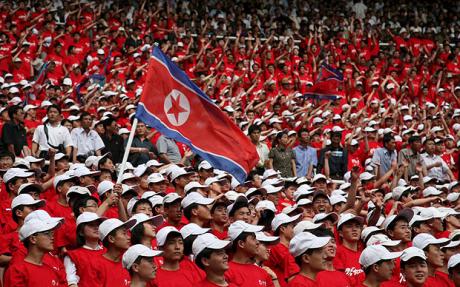
In 1966, after a qualification marked by controversy, withdrawals and political intrigue, North Korea arrived to play in the World Cup as unknown players from a land that few knew very much of. Typical of the British culture, ever keen to support the underdog though, the fans took to the ‘Chollima’ squad with their small stature and naïve innocence.
It was an approach that saw them vanquish Italy in one of the most sensational results in World Cup history and then lead Portugal by three goals to nil, before being swamped by the brilliance of Eusebio. The football observing public were charmed by these apparent innocents abroad. A brief dip into the fairy-tale of make believe that, as always seems to be the case, eventually fell short. The North Koreans left for home, leaving behind them nothing but fond memories of a team small in stature, but big in heart. Continue reading →
 Gary Thacker